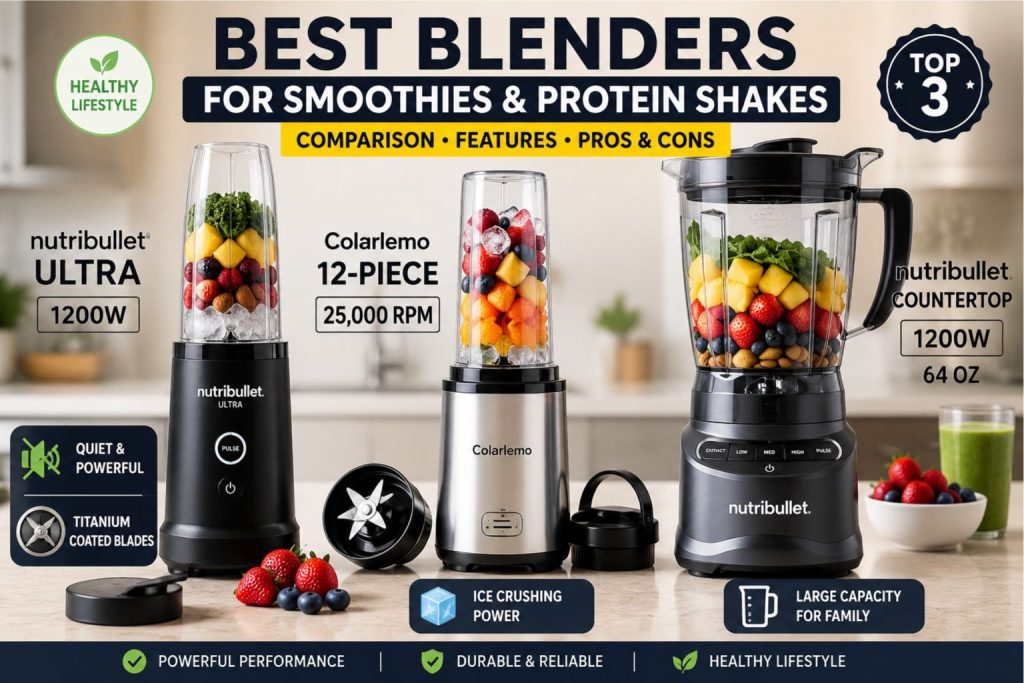
Choosing how to choose a blender for smoothies sounds simple until you start comparing wattage, blade design, jar sizes, speed settings, and dozens of different models.
A good smoothie blender should do more than simply mix soft fruit. If you regularly use frozen fruit, ice, leafy greens, seeds, or thicker ingredients, the blender needs enough power and a suitable blade-and-jar design to produce a smooth, consistent texture.
The good news is that you don’t necessarily need the most expensive blender available. The right choice depends on what you normally put in your smoothies, how often you make them, how many people you serve, and how easy you want cleanup to be.how to choose a blender for smoothies
In this guide, we’ll explain exactly what to look for when choosing a blender for smoothies so you can make a more informed buying decision.
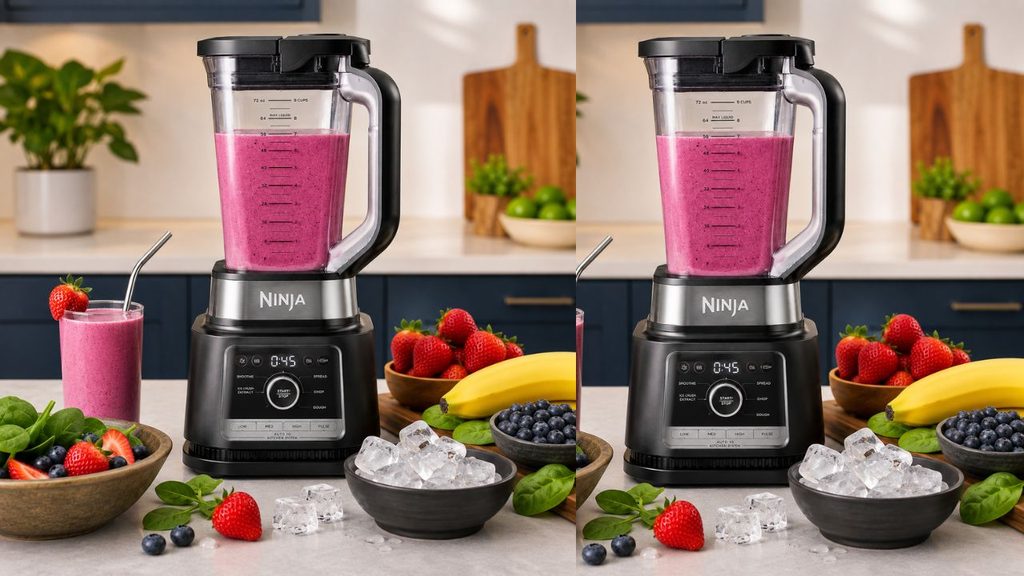
Quick Answer: What Makes a Good Smoothie Blender?
For most smoothie makers, look for a blender with:
- Sufficient motor power for your ingredients
- Strong blades designed for blending
- A jar that fits your usual serving size
- Multiple speed settings or useful preset programs
- A container with a shape that helps circulate ingredients
- Easy-to-clean parts
- A sturdy base that doesn’t move excessively during operation
- A warranty from the manufacturer
If you frequently blend frozen fruit, ice, nuts, or leafy greens, power and blade performance become especially important. how to choose a blender for smoothies
1. Consider how to choose a blender for smoothies
The first step is to think about your typical smoothie ingredients.
A smoothie made from bananas, yogurt, and fresh berries is relatively easy to blend. A smoothie containing frozen fruit, ice, spinach, seeds, and thicker ingredients requires more work from the blender.
For soft fruits
If your smoothies mainly contain:
- Bananas
- Mangoes
- Strawberries
- Yogurt
- Milk
- Soft fresh fruits
You may not need an extremely powerful blender.
For frozen fruit
Frozen fruit is considerably harder than fresh fruit, particularly when pieces are large.
If frozen ingredients are part of your regular smoothie routine,how to choose a blender for smoothies
choose a blender designed to handle frozen foods and follow the manufacturer’s recommended loading and operating instructions.
For leafy greens
Spinach, kale, and similar ingredients can require good circulation inside the jar.
A suitable jar shape and blending action can be just as important as motor power.
For ice
If you regularly add ice, look for a blender specifically designed for ice or frozen ingredients rather than assuming that every blender can handle large amounts of ice.
Best Blender for Smoothies 2026: Ninja vs Hamilton Beach vs NutriBulleth
2. How Much Blender Power Do You Need?
Motor power is one of the most frequently advertised blender specifications, but it shouldn’t be the only factor you consider.
Higher wattage can indicate greater electrical power available to the motor, but real-world blending performance also depends on blade design, jar geometry, motor control, and the ingredients being blended.
For this reason, don’t choose a blender simply because it has the highest wattage on the product page.how to choose a blender for smoothies
A practical approach
Think about your ingredients first:
| Smoothie ingredients | What to prioritize |
| Fresh soft fruit | Basic blending capability |
| Frozen berries | Strong motor + suitable blades |
| Frozen fruit + ice | Higher power + appropriate ice capability |
| Leafy greens | Good circulation + blade performance |
| Thick smoothies | Strong motor + suitable jar design |
| Large family batches | Power + larger container |
If you’re unsure, choosing a model from an established blender manufacturer with specifications designed for your intended ingredients can be a safer approach than focusing on one number.
3. Pay Attention to Blade Design
Blades are another important part of smoothie performance.
A blender may have a powerful motor, but the overall result still depends on how the blades interact with the ingredients.
When comparing models, look at:
- Blade configuration
- Blade material
- Blade placement
- Manufacturer’s intended use
- Whether the blade assembly is removable
- Cleaning requirements
More blades do not automatically mean a better blender.
The combination of motor, blade design, container shape, and blending program determines how ingredients move through the jar.
4. Choose the Right Jar Size
Container capacity should match the amount you normally make.
A compact personal blender can be convenient if you usually make one smoothie for yourself. A larger countertop blender makes more sense if you prepare multiple servings.
Personal blender
A personal blender is useful when:
- You make one serving at a time
- You want a compact appliance
- Counter space is limited
- You prefer blending directly into a portable cup
Full-size blender
A full-size blender may be better when:
- You make smoothies for several people
- You prepare larger batches
- You want more versatility
- You regularly blend larger quantities
Don’t automatically choose the largest container. A large blender can take up significant counter and storage space.
5. Look at Speed Settings and Programs
Different blenders offer different controls.how to choose a blender for smoothies
Some have simple low/high controls, while others include multiple speeds, pulse functions, or automatic programs.
For smoothies, useful controls can include:
Variable speed
Variable speed gives you more control over the blending process.
You can start slowly and increase the speed as the ingredients begin moving.
Pulse function
Pulse can help with short bursts of blending and may be useful for breaking up ingredients before continuing with a longer blend.
Automatic smoothie programs
Some models include dedicated smoothie settings.
These can be convenient if you prefer pressing one button rather than manually adjusting the speed.
However, automatic programs aren’t essential. A well-designed manual control system can work perfectly well.
6. Consider the Shape of the Blender Jar
Jar design is often overlooked.
A well-designed container helps ingredients circulate toward the blades instead of remaining stuck around the sides.
This can be particularly useful when making thick smoothies.
When comparing blenders, look at product images and manufacturer information to understand how the container is designed.
Also consider whether the lid has an opening that allows ingredients to be added safely during blending, if the manufacturer permits it.
7. Think About Noise
Powerful countertop blenders can be noisy.
If you live in an apartment, have a sleeping family member nearby, or normally make smoothies early in the morning, noise may matter more to you than it does to another buyer.
Manufacturers don’t always provide standardized noise measurements, so be careful when comparing claims such as “quiet” across different brands.
Instead, look for reliable reviews that specifically discuss operating noise.
8. Cleaning and Maintenance Matter
A blender that’s difficult to clean can become frustrating if you use it every day.
Before buying, check:
- Whether the jar is dishwasher-safe
- Whether the lid is easy to remove
- How easily residue can be removed
- Whether the blade assembly is removable
- Whether the manufacturer provides cleaning instructions
Always follow the manufacturer’s cleaning instructions.
Don’t immerse electrical components or the motor base in water.
For a quick cleanup after a smoothie, many manufacturers recommend rinsing the container promptly rather than allowing dried ingredients to remain inside for a long period.
Ninja Professional Blender Review 2026
9. Check the Blender’s Warranty
Warranty coverage can provide useful protection if something goes wrong.
Before purchasing, check:
- Warranty length
- What components are covered
- Whether the motor is covered
- Whether accessories are included
- Warranty exclusions
- How warranty claims are handled
A longer warranty isn’t automatically proof that one blender is better, but it can be an important factor when comparing otherwise similar products. how to choose a blender for smoothies
10. Consider Counter Space and Storage
Don’t forget about the physical size of the blender.
Measure your available counter space before purchasing, especially if you have a small kitchen.
Consider:
- Overall height
- Width
- Depth
- Storage space
- Cabinet clearance
- Jar storage
- Cord storage
Some tall blender jars may not fit comfortably beneath kitchen cabinets.
11. Personal Blender vs Full-Size Blender
One of the biggest decisions is whether you need a personal or full-size model.
| Feature | Personal Blender | Full-Size Blender |
| Typical use | Single servings | Multiple servings |
| Counter space | Usually less | Usually more |
| Capacity | Smaller | Larger |
| Portability | Often better | Usually lower |
| Large batches | Limited | Better suited |
| Versatility | Depends on model | Usually greater |
If you only make one smoothie each morning, a personal blender may be sufficient.
If you make smoothies for your family or want to prepare larger batches, a full-size blender may be the better choice.
12. Don’t Buy Based on Wattage Alone
This deserves repeating.
A blender with a higher wattage number isn’t automatically the best smoothie blender.
Instead, evaluate the entire system:
Motor + blades + jar design + controls + intended ingredients + durability + warranty
A slightly less powerful blender with a well-designed blending system can be a better fit than a model with a much larger advertised wattage.
13. How Much Should You Spend?
There isn’t one correct price for everyone.how to choose a blender for smoothies
Your budget should depend on how frequently you use the blender and what you expect it to do.how to choose a blender for smoothies
Occasional smoothie maker
If you make simple smoothies occasionally, a basic model may be enough.
Daily smoothie maker
If you make smoothies every day, spending more on durability, convenience, cleaning, and performance may make sense.
Heavy-duty user
If you frequently blend frozen ingredients, ice, thick mixtures, or larger batches, prioritize performance and build quality over cosmetic features.
The goal isn’t to buy the most expensive blender. It’s to buy the blender that matches your actual needs.
14. Features That Are Nice to Have
Some features can make a blender more convenient but aren’t essential.
These may include:
- Preset smoothie programs
- Multiple speed settings
- Pulse control
- Travel cups
- Tamper tools
- Dishwasher-safe components
- Digital controls
- Automatic shutoff
- Overload protection
Prioritize useful features over features you are unlikely to use.how to choose a blender for smoothies
15. Who Should Buy a High-Performance Blender?
A high-performance blender may be worth considering if you:
- Make smoothies frequently
- Use frozen fruit regularly
- Add ice to smoothies
- Blend leafy greens
- Prepare thick smoothies
- Want a versatile appliance for multiple kitchen tasks
- Make larger batches
However, if your smoothies consist mainly of soft fresh ingredients, you may not need a premium model.
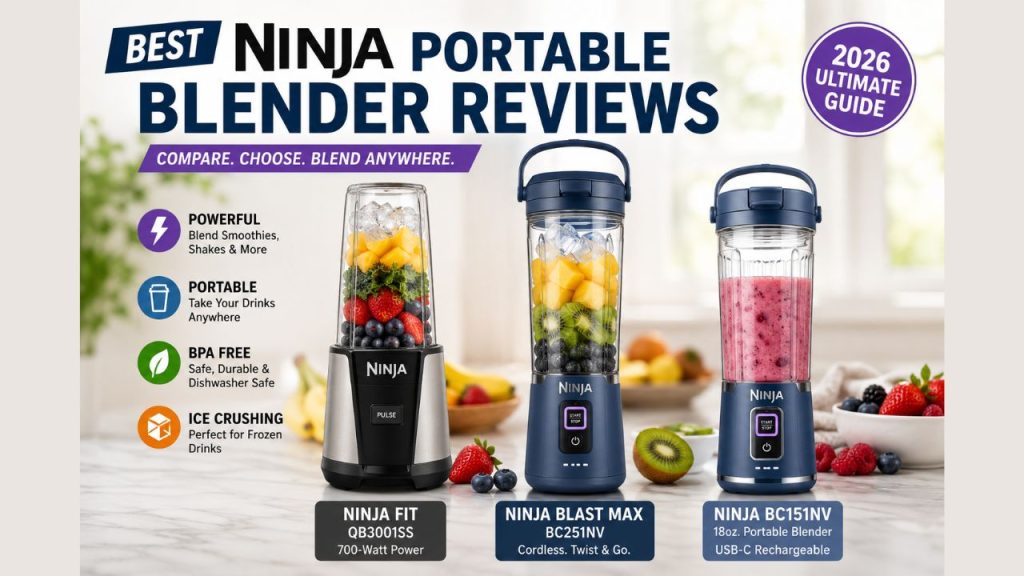
Best Ninja Portable Blender Reviews 2026
16. Who Should Skip an Oversized Blender?
A large countertop blender may be unnecessary if:
- You only make one smoothie at a time
- You have limited counter space
- You rarely use a blender
- You don’t make thick or frozen smoothies
- You prefer a compact appliance
In these cases, a personal blender could be a more practical choice.
17. Questions to Ask Before Buying
Before clicking the Buy button, ask yourself:
- How often will I use the blender?
- Do I use frozen fruit?
- Do I use ice?
- Do I blend leafy greens?
- Do I normally make one serving or several?
- How much counter space do I have?
- Is noise important?
- How easy is the blender to clean?
- What warranty does the manufacturer provide?
- Does the blender fit my budget?
Answering these questions can eliminate many unsuitable options.how to choose a blender for smoothies how to choose a blender for smoothies
Frequently Asked Questions
What is the best type of blender for smoothies?
The best type depends on your ingredients and serving size. A personal blender can work well for single servings, while a full-size blender is generally more suitable for larger batches and greater versatility.
How many watts should a blender have for smoothies?
There isn’t one wattage number that guarantees good smoothie performance. Motor power should be considered alongside blade design, jar geometry, controls, and the ingredients you plan to blend.
Is a personal blender good for frozen fruit?
Some personal blenders are designed to handle frozen ingredients, while others are not. Always check the manufacturer’s specifications and usage instructions before blending frozen foods.
Can every blender crush ice?
No. Blender capabilities vary. If crushing ice is important to you, choose a model whose manufacturer specifically states that it is suitable for ice.
Is a glass blender jar better than plastic?
Not necessarily. Glass can resist staining and odors, while plastic containers can be lighter and easier to handle. The best option depends on your priorities and the manufacturer’s design. how to choose a blender for smoothies
How long should a smoothie blender last?
Lifespan varies significantly depending on the model, frequency of use, maintenance, and ingredients. Following the manufacturer’s instructions and avoiding uses outside the blender’s intended purpose can help protect the appliance.
Should I buy a blender with a smoothie preset?
A smoothie preset can be convenient, but it isn’t essential. Manual speed controls can provide plenty of flexibility.
How do I clean a blender after making a smoothie?
Rinse the container promptly and follow the manufacturer’s cleaning instructions. Pay particular attention to the blade area and lid, where ingredients can collect.
Final Verdict
Choosing the right blender for smoothies isn’t simply about finding the blender with the highest wattage or the longest list of features.
Start with your actual smoothie routine.
If you mainly blend soft fresh fruit and make one serving at a time, a compact personal blender may be all you need. If you regularly use frozen fruit, ice, leafy greens, or thicker ingredients, look for a blender designed specifically to handle those ingredients.
For larger households, a full-size blender can provide greater capacity and versatility. For smaller kitchens, a compact model can save valuable counter space.
Most importantly, evaluate the complete blending system rather than one specification. Consider motor power, blade design, jar size, controls, cleaning, noise, warranty, and the manufacturer’s intended use.
The best smoothie blender is ultimately the one that fits your ingredients, your kitchen, your budget, and your daily routine.
“How Many Watts Does a Good Blender Need?” to your upcoming wattage guide.how to choose a blender for smoothies
Final Recommendation
If you’re serious about improving your kitchen setup, this is the product we recommend most.
Shop Now